
Unspecified codes are not inherently wrong. ICD-10-CM official guidelines allow them when the record lacks detail, but payers scrutinize them and often deny them. Your first move is to read the ERA/835 against the CMS remittance code lists, pull the chart, and decide whether the documentation supports a more specific code. We built HIMShield to help with exactly that triage.
TL;DR:
- Use an unspecified code when the record lacks required detail, such as during an unfinished workup; never assign specificity the documentation cannot support.
- Read the 835 group code for responsibility, then match its reason code with the remark and payer text to identify the fix.
- Prioritize denials by dollar value and frequency, and investigate repeated failures tied to one diagnosis code for an encoder or EHR default.
- Correct coding when it was wrong or the chart supports a better code; appeal when the original code was accurate and the payer misapplied rules.
- Prevent repeat denials with documentation prompts for laterality, cause, and acuity, while checking monthly whether one provider template drives unspecified coding.
Table of Contents
- When are unspecified ICD-10 codes appropriate?
- What do denial signals look like on an ERA or 835?
- How do you triage coding-related denials in your workflow?
- How do you resolve and appeal an unspecified-code denial?
- How do you prevent unspecified-code denials before they happen?
- Why accuracy comes first, and recovery second
- Quantify your unspecified-code risk with a free audit
- FAQ
- Sources
When are unspecified ICD-10 codes appropriate?
The official guidance is clear: unspecified codes are for encounters where the medical record does not contain the detail needed to assign a more specific code. Sign and symptom codes and unspecified codes have acceptable and necessary uses when specificity is not yet known. You code to the level of certainty the record supports, and you query the provider when documentation is unclear. The CMS-hosted copy of the FY26 coding guidelines repeats the same rule: never select a specific code the documentation does not support.
The distinction between code types matters. Coding experts advise reserving "other" codes for detail that exists but has no exact code, and "unspecified" codes for when the record simply lacks the detail. Unspecified codes may receive closer scrutiny.
- Acceptable: coding a presenting symptom while the workup is still in progress.
- Acceptable: an incomplete diagnostic evaluation at the time of the encounter.
- Acceptable: documentation that does not state laterality or etiology, after a query goes unanswered.
- Not acceptable: forcing specificity the record does not support.
What do denial signals look like on an ERA or 835?
Every adjustment on an 835 carries a two-character group code and a numeric reason. The X12 claim adjustment reason code guidance explains how group codes assign responsibility. CO means contractual obligation, so the practice usually cannot bill the patient. PR means patient responsibility. OA means other adjustment, which fits neither category.
The numeric reasons live in the ANSI/X12 list, which the CMS Blue Button API publishes alongside the group codes. Watch for these patterns:
- Lack of documentation or information needed to adjudicate the claim.
- Services not covered or not medically necessary for the diagnosis billed.
- Missing precertification or authorization.
- Bundled or non-payable services.
The CMS Manual System (Pub. 100-04) is the authoritative federal reference for remittance advice remark codes and reason code lists used to generate HIPAA-compliant remittances.
A reason code alone rarely says "unspecified." Pair it with the remark code and any payer free text. Phrases about insufficient specificity or diagnosis-to-service mismatch usually point back to your diagnosis coding.
How do you triage coding-related denials in your workflow?
Start where the data lives. On the 835, read the CAS segment for the group code, reason code and amount. Then check the RARC for the payer's explanation, and read any free text. The group code tells you who owns the balance. The reason and remark codes tell you whether the fix is documentation, coding or billing.
Then work each flagged claim through this checklist:
- Flag by dollar value and frequency, so high-impact denials go first.
- Pull the chart for the date of service.
- Review provider notes, orders and diagnostic results for missing specifics.
- Check the payer's rules and filing deadlines.
- Decide: appeal the denial or submit a corrected claim.
Pro Tip: Sort denials by diagnosis code. When many claims fail on the same unspecified code, the cause is often an encoder or EHR default, not individual coder error.
How do you resolve and appeal an unspecified-code denial?

Industry guidance notes that unspecified-code denials have been rising and recommends appealing inappropriate ones when documentation supports a more specific diagnosis. Your appeal should show that the assigned code was the most medically accurate for the encounter. For a related playbook, see our guide to reclaiming denied revenue.
Follow this sequence:
- Assemble the clinical evidence: progress notes, labs, imaging and orders.
- Cite the relevant ICD-10-CM guideline language where it applies.
- Add a focused, provider-signed note or addendum, only where payer and compliance rules allow it.
- Submit within the payer's appeal window.
- Log the appeal in the EHR and your practice tracker.
Every appeal letter should include:
- Claim identifiers: patient, date of service, claim number and payer.
- The clinical rationale for the diagnosis code billed.
- Supporting documents, each referenced in the letter.
- A clear requested action: reprocess or accept the resubmission.
Choose a corrected claim when the coding itself was wrong or the record supports a better code. Choose an appeal when the claim was coded correctly and the payer's denial misapplied the rules.
How do you prevent unspecified-code denials before they happen?
Prevention starts at the point of documentation. Providers should capture laterality, etiology, acuity, objective findings and diagnostic results in every note where they apply. Our ICD-10 specificity guide goes deeper, and our denial prevention strategy lays out a 30–180 day timeline.
- Documentation: use templates that prompt for laterality, etiology and acuity, and avoid automatic unspecified-code defaults in the EHR.
- Workflow: audit unspecified-code usage on a routine schedule, standardize provider query templates, and train coders on clinical signals.
- Technical: configure encoder prompts, disable automatic .9 fallbacks where safe, and build payer-specific rule sets.
- KPIs: track your unspecified-code rate, the denial rate on those codes, appeal success rate and average recovery time.
Pro Tip: Review the KPIs monthly by provider and by payer. A single provider's template can drive most of your unspecified-code volume.
Our checklist on how to reduce claim denials covers the broader workflow around these controls.
Why accuracy comes first, and recovery second
I hold two ideas together. Document accurately first, because an unspecified code that truthfully reflects the record is defensible, and a specific code the chart cannot back is a compliance problem. Then appeal hard when the documentation does support specificity, because payers count on practices giving up. Do not stop at appeals. Prevention is cheaper than recovery every time. Start with your highest-dollar and highest-frequency denial streams, and fix those first.
— Elena
Quantify your unspecified-code risk with a free audit
Most practices cannot say how much revenue sits behind their unspecified codes. Our Free 30-day Revenue Leakage Audit answers that: we quantify the risk and pinpoint the documentation and coding gaps behind it within 30 days. If you want ongoing coverage, our HIM compliance engagement adds automated pattern detection, physician-friendly queries and appeal-ready documentation, so you recover more and deny less.
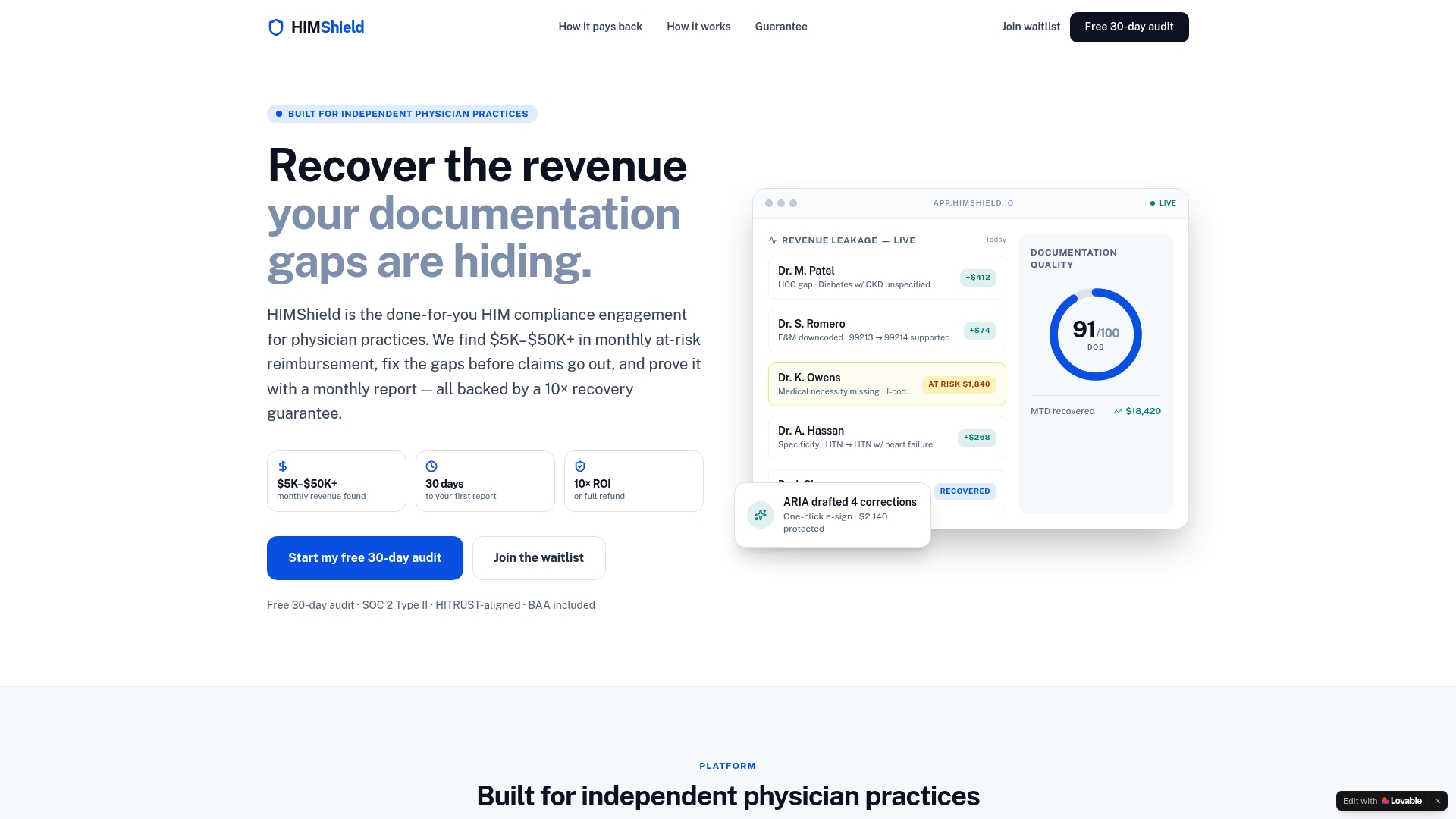
Start your free audit, or contact us about a compliance engagement.
FAQ
What do the main denial code groups mean?
Group codes show who is responsible for the adjusted amount. CO means contractual obligation, PR means patient responsibility, and OA means other adjustment. The numeric reason code that follows explains why the amount was adjusted.
What does the CO 96 denial code mean?
CO 96 is a contractual adjustment for a charge that is not covered. The X12 interpretation request on CO-96 versus OA-23 shows how it differs from OA-23 in secondary payer scenarios. Read the remark code for the payer's specific reason.
Which code tells me why a claim was denied?
The claim adjustment reason code (CARC) states why the payer adjusted or denied the amount. The remittance advice remark code (RARC) adds detail. Together with the group code on the CAS segment, they tell you whether to fix documentation, correct coding or appeal.
Should I appeal or resubmit a corrected claim?
Resubmit a corrected claim when the coding was wrong or the chart supports a better code. Appeal when the original code was accurate and the payer's denial misapplied the rules. Check payer deadlines before choosing.
Sources
- ICD-10-CM October 2025 FY26Guidelines
- Variable: ANSI Reason Code - Claim Adjustment Reason Code - CMS Blue Button API
- 2023 diagnosis coding specificity - ACAAI Member