
A provider education session is a structured, data-driven training event that equips healthcare providers with the knowledge to improve documentation accuracy, regulatory compliance, and patient outcomes. These sessions sit at the core of any physician practice compliance program and draw directly from audit findings, coding trends, and CMS regulatory requirements. They are not generic workshops. They are targeted interventions designed to close specific gaps between how providers document care and what payers, auditors, and quality programs require. For healthcare administrators, understanding what a provider education session delivers, and how to build one that works, is one of the highest-return investments you can make in your practice.
What is a provider education session and how is it structured?
A provider education session is a structured, cross-functional initiative that transforms audit results and coding data into targeted learning. The industry term for this practice is "provider continuing education," and it encompasses everything from new provider orientation to specialty-specific coding refreshers and documentation improvement workshops.
The most effective sessions pull content directly from real audit findings. Coding teams, HIM professionals, and revenue cycle staff collaborate before any session is scheduled to identify which documentation gaps are causing the most claim denials or compliance risk. That cross-functional input is what separates a high-impact session from a generic training event that providers ignore.
Delivery formats vary by practice size and provider preference:
- Group training sessions: Best for organization-wide policy updates, CMS regulation changes, or new coding guidelines affecting multiple specialties
- One-on-one coaching: Most effective for providers with persistent documentation habits that group sessions have not corrected
- E-learning modules: Useful for reinforcing concepts between live sessions and for providers with limited availability for scheduled training
- Case-based workshops: Highly effective for specialty-specific coding scenarios, such as HCC gap closure or E/M level selection
Timing matters as much as format. New providers ideally complete orientation with education before seeing patients, typically within 30 days of joining a practice. That early window sets documentation expectations before habits form.
Pro Tip: Schedule your first post-hire education session before the provider's first billing cycle, not after the first audit. Correcting habits costs far more than establishing them correctly from day one.
Content must be tailored by specialty and experience level. A cardiologist and a family medicine physician face entirely different documentation challenges. One-size-fits-all training causes engagement to drop and rarely produces lasting change.

How do provider education sessions improve patient care and revenue?
The measurable impact of provider training sessions on both clinical and financial outcomes is well documented. One targeted education program raised high-level inpatient visit rates from 18.38% to 32.01%. That shift reflects more accurate documentation of patient complexity, not upcoding. It means providers were finally capturing the full clinical picture in their notes.
Better documentation produces a chain of downstream benefits:
- Fewer claim denials: Payers reject claims when documentation does not support the billed code. Targeted education directly reduces that mismatch.
- Reduced appeals workload: Every denial that does not happen is an appeal your billing team does not have to file.
- Improved HCC capture: Accurate chronic condition documentation supports risk-adjusted reimbursement under value-based contracts.
- Stronger audit defense: Well-documented records are far easier to defend during a CMS or payer audit.
The benefits extend beyond revenue. Accredited continuing medical education links documentation accuracy, communication skills, and informed consent training directly to reduced malpractice claims. That connection makes provider education a risk mitigation tool, not just a billing improvement exercise.
Multi-component education programs with ongoing reinforcement significantly improve patient outcomes. A single session on proper diagnosis documentation can reduce medication errors, improve care transitions, and support more accurate quality reporting under MIPS or other value-based programs. The clinical and financial benefits compound when education is continuous rather than episodic. For a deeper look at how HIM roles support revenue integrity, the connection between documentation quality and earned revenue becomes even clearer.
What challenges exist in conducting effective provider education sessions?
Provider resistance is the most common reason education programs fail. Physicians are busy, and many view documentation training as an administrative burden rather than a clinical tool. Overcoming that resistance requires a specific approach.
- Lead with data, not criticism. Showing a provider their own denial rate or audit findings is far more persuasive than citing general statistics. Replacing anecdotal criticism with evidence-based feedback improves engagement and produces better outcomes.
- Connect education to the provider's specialty. A hospitalist needs different content than an orthopedic surgeon. Generic sessions that do not reflect a provider's actual patient population lose credibility fast.
- Address workflow realities. If a documentation improvement requires five extra minutes per note in an already overloaded EHR, providers will not adopt it. Education must include practical, workflow-compatible solutions.
- Reinforce learning over time. Education alone rarely changes entrenched documentation habits without ongoing support. A single annual training event is not a program. It is a checkbox.
- Involve physician champions. Peer-to-peer education carries more weight than administrator-led sessions. Identifying respected physicians who model strong documentation practices and involving them in training increases adoption.
The pitfall of generic content is real and measurable. When providers sit through a session that does not reflect their specialty or their actual coding errors, they disengage. That disengagement is not a personality problem. It is a design problem.
Pro Tip: Pull the top five denial reasons for each provider before designing their session content. That specificity signals that the training is about their practice, not a generic compliance requirement.
How do you design and implement impactful provider education programs?
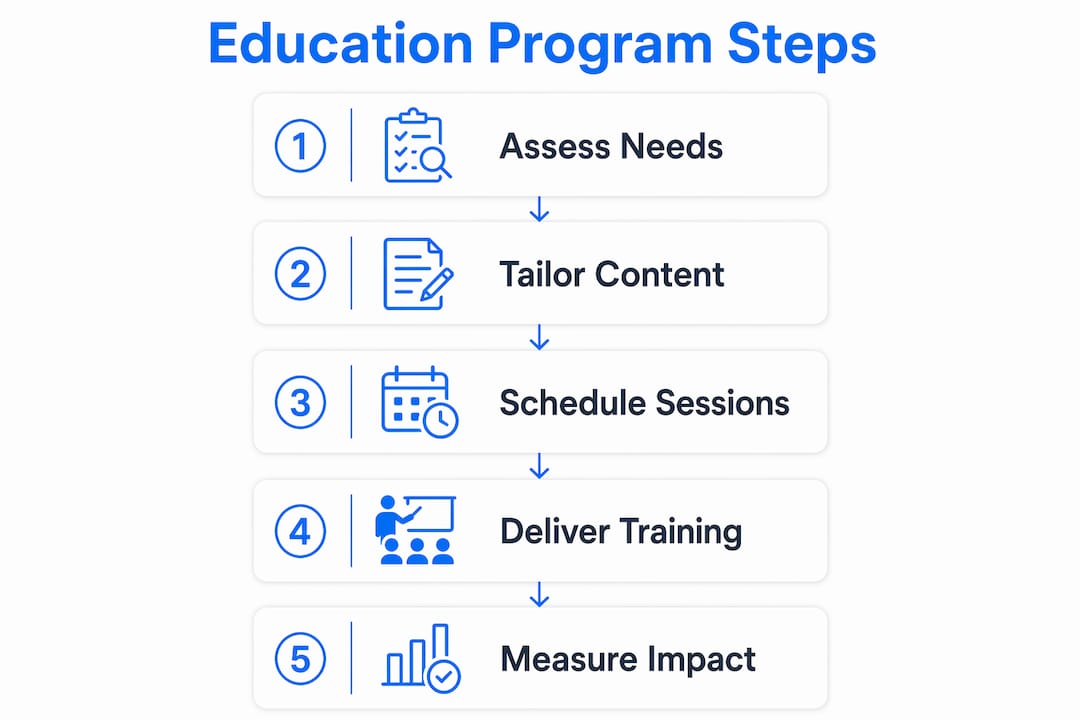
Designing a provider education program that produces lasting results requires more than scheduling sessions. It requires a repeatable system with defined roles, data inputs, and evaluation checkpoints.
Defining educator roles and qualifications
The educator leading sessions should hold credentials in HIM, coding, or clinical documentation improvement. Certified Professional Coders (CPCs), Registered Health Information Administrators (RHIAs), and CDI specialists all bring relevant expertise. Practices without internal resources often partner with external HIM consultants or use platform-based education tools. Review CDI best practices for medical groups to understand the full scope of what a qualified educator should cover.
Building a data-driven content calendar
Sessions should follow a predictable cycle tied to audit results and coding updates. A practical annual structure looks like this:
| Education Trigger | Recommended Session Type | Timing |
|---|---|---|
| New provider hire | Orientation and documentation basics | Within 30 days |
| Annual CMS coding updates | Group training on new guidelines | January each year |
| Audit findings or denial spikes | Targeted one-on-one or small group | Within 60 days of audit |
| New value-based contract | HCC capture and quality reporting | At contract start |
| Ongoing reinforcement | E-learning modules or case reviews | Quarterly |
Tracking and evaluating effectiveness
Measuring the impact of provider training sessions closes the loop between education and outcomes. Track pre- and post-session coding accuracy rates, denial rates by provider, and documentation quality scores from audits. If a session does not move those metrics within 90 days, the content or delivery method needs adjustment. Successful programs embed education into ongoing workflows rather than treating it as a standalone event.
Key Takeaways
Provider education sessions are the most direct tool healthcare administrators have for improving documentation accuracy, reducing claim denials, and protecting revenue at the practice level.
| Point | Details |
|---|---|
| Definition and purpose | A provider education session is a structured, data-driven training tied to audit findings and coding trends. |
| Timing is critical | New providers should complete orientation within 30 days to establish documentation habits before billing begins. |
| Measurable revenue impact | Targeted sessions have raised high-level visit documentation rates significantly, directly increasing earned revenue. |
| Specialty-specific content wins | Generic training reduces engagement; content tailored to each provider's specialty and denial patterns drives results. |
| Ongoing reinforcement is required | A single session rarely changes behavior; continuous education embedded in workflows produces lasting improvement. |
Why I think most practices underestimate what provider education actually does
Most healthcare administrators treat provider education as a compliance requirement. They schedule an annual session, check the box, and move on. That approach leaves real money and real patient safety gains on the table.
What I have seen work is treating education as a performance management tool. When you bring a provider their own data, show them exactly where their documentation is creating denials or audit risk, and then give them a specific, workable fix, the conversation changes completely. It stops being about compliance and starts being about their patients and their practice.
The practices that see the biggest gains from provider continuing education are the ones that make it continuous and specific. They do not wait for an annual review cycle. They run a targeted session within weeks of an audit finding. They track whether the behavior changed. They adjust the content when it does not.
The other thing most administrators miss is the malpractice angle. Accredited CME tied to documentation and communication reduces malpractice exposure. That is not a soft benefit. That is a financial and legal risk reduction that belongs in the same conversation as revenue recovery.
Provider education is not a training event. It is a system. Build it like one.
— Elena
How Himshield supports your provider education and compliance goals
Independent physician practices often lack the internal infrastructure to run data-driven provider education programs consistently. Himshield fills that gap by identifying the coding, documentation, and charge-capture risks that should be driving your session content in the first place.
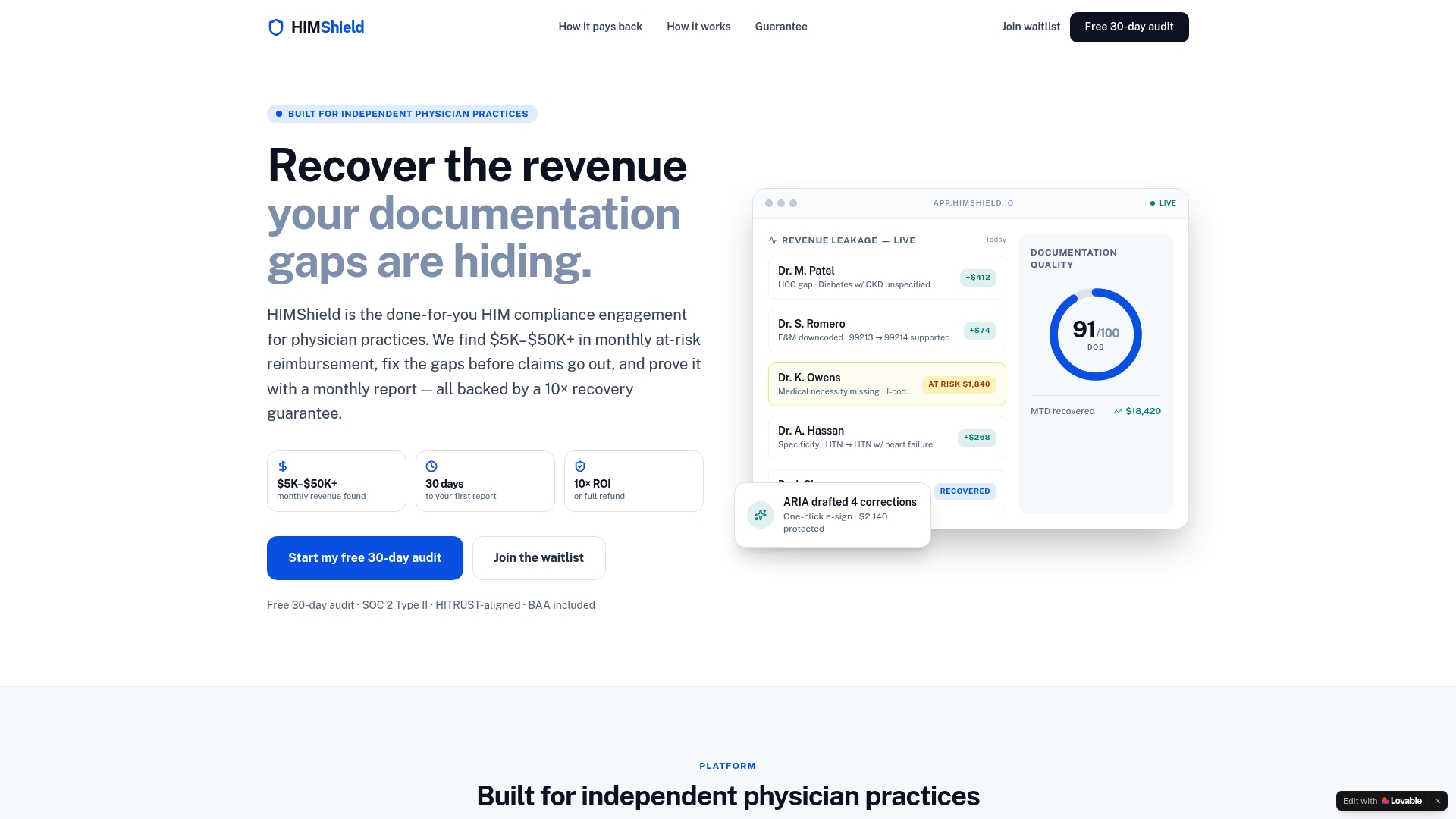
Himshield scans your practice's billing and documentation data to surface the specific gaps creating denial risk and revenue leakage. That means your education sessions start with real findings, not guesswork. When providers see their own data reflected in the training, engagement goes up and behavior changes faster. Practices using Himshield have recovered $5K–$50K+ in hidden revenue by addressing exactly the documentation patterns that targeted education corrects. If you want to see how the platform works and how it can feed your provider education program with the right data, review how it works and request a demonstration.
FAQ
What is a provider education session in healthcare?
A provider education session is a structured training event that uses audit findings and coding data to improve provider documentation, compliance, and patient care outcomes. It is a core component of any physician practice compliance program.
How often should provider education sessions be conducted?
Sessions should occur at minimum annually for coding updates, within 30 days for new provider orientation, and within 60 days of any significant audit finding or denial spike.
What topics should provider education sessions cover?
Topics include E/M level selection, diagnosis coding accuracy, HCC gap closure, CMS regulatory updates, and specialty-specific documentation requirements tied to each provider's actual denial patterns.
How do provider education sessions reduce claim denials?
Targeted training corrects the specific documentation habits that cause payers to reject claims. When providers document patient complexity accurately, the billed code matches the clinical record and denials drop.
What makes a provider education program effective long-term?
Multi-component programs with ongoing reinforcement, specialty-specific content, and integration into daily workflows produce sustained behavior change. A single annual session is not sufficient to alter established documentation habits.