
The moment a payer overpayment demand hits your desk, the clock starts. Verify the payer's identifiers and calculate the true deadline, assign a senior staff point person, notify the treating clinician, and preserve every piece of supporting documentation. Do not send anything that admits liability while you assemble records. The practices that lose the most money are the ones that panic first and read the letter second.
TL;DR:
- Verify payer identifiers, claim details, and supporting documentation within the first three days to avoid costly mistakes and unnecessary payments.
- Demand detailed calculations, claim identifiers, patient IDs, and supporting remittance advices before responding to the demand, especially if the letter lacks clarity.
- Assemble a comprehensive response package with clinical records, lab reports, authorization documents, and a cover letter detailing each entry's coding support and discrepancies.
- File a rebuttal within 15 days for Medicare claims, but submit a redetermination within 120 days to preserve appeal rights and include all relevant documentation.
- Focus on contesting well-documented, high-probability claims and implement pre-submission audits to prevent future overpayment demands.
Table of Contents
- How Do You Respond to an Overpayment Demand in the First 72 Hours?
- What Should You Verify Before Accepting the Payer's Numbers?
- What Documents Belong in Your Response Package?
- When Do Rebuttal, Redetermination, and Recoupment Timelines Apply?
- Should You Pay, Negotiate, or Appeal the Overpayment?
- How Can Your Practice Prevent the Next Overpayment Demand?
- Publisher Perspective: Lessons From Audits and What Realistically to Expect
- How Himshield Helps Practices Prevent the Next Demand Letter
- Sources
- FAQ
How Do You Respond to an Overpayment Demand in the First 72 Hours?
Every hour matters once the letter lands. The first three days set the tone for everything that follows, and skipping a step here often costs more than the original overpayment.
- Log the demand immediately. Record the FCN or Letter ID, every claim number listed, and the exact deadline stated in the letter. Store the original document somewhere staff cannot lose or overwrite it.
- Assign one point person. Pick a senior staff member with billing and clinical liaison experience to own the response, and loop in the treating clinician the same day so they can start reviewing records.
- Flag missing information. If the letter lacks claim identifiers or a clear calculation, request the payer's supporting remittance advices and math before you do anything else.
- Request an extension in writing if needed. Document the request and the payer's response; a paper trail protects you if timelines get disputed later.
- Decide your procedural path. Determine whether you'll request immediate recoupment, file a rebuttal, or start a formal appeal, and write down the reasoning behind that choice.
The AMA's payor audit checklist treats records requests as a top organizational priority for good reason: incomplete or late responses tend to invite the exact adverse findings you're trying to avoid.
What Should You Verify Before Accepting the Payer's Numbers?
Never take a payer's overpayment calculation at face value. Demand letters vary wildly in quality, and a surprising number contain errors that only surface once someone checks the math line by line.
Start by confirming the letter includes everything it's supposed to. A compliant Medicare Administrative Contractor demand letter must state how the overpayment was calculated, list patient names and Medicare Beneficiary Identifiers, specify dates and types of service, and spell out your rebuttal and appeal rights.
Pull together these items before you respond:
- FCN, ICN, or Letter ID exactly as printed on the notice
- Every claim number referenced in the demand
- Patient MBI or internal patient ID for each disputed claim
- Dates of service and the specific CPT codes and modifiers billed
- The payer's remittance advices supporting the original payment
If the contractor used sampling or extrapolation to calculate the amount owed, request the sampling methodology and the full claim universe it drew from. Extrapolated findings built on a small, unrepresentative sample are one of the most common weak points in a payer's case.
Pro Tip: If a demand letter arrives without enough identifying detail to even locate the claims in question, contact the payer directly and get those details in writing before you decide whether to pay or appeal. Responding blind is how practices end up repaying money they never actually owed.
What Documents Belong in Your Response Package?
A strong response package does the payer's job for them: it maps documentation directly to billed codes so there's nothing left to guess. Assemble it methodically rather than dumping every file into a folder and hoping something sticks.
Include, at minimum:
- Signed and dated progress notes for every disputed encounter
- Imaging and lab reports tied to the dates of service in question
- External records referenced in the chart (specialist notes, hospital discharge summaries)
- Physician orders and prior authorization approvals
- Eligibility verification records
- Remittance advices for the claims under review
- A clean EHR export of the full encounter
Lab documentation deserves particular attention when disputed claims involve diagnostic testing. Resources like lab testing optimization guidance for single-specialty practices can help you spot gaps in how lab orders and results connect to the billed encounter.
Have the treating clinician review the entire package and add a dated cover statement identifying which entries are contemporaneous. Backdated or after-the-fact additions can undermine an otherwise strong case, so timestamps matter more than most administrators realize.
Write a cover letter that walks the reviewer from each documentation line to the specific code it supports, and explain any discrepancies rather than hoping they go unnoticed. The AMA notes that a tight internal submission log paired with a clinician's contemporaneous cover statement materially improves outcomes, largely because adjudicators frequently miss clinical context buried in a raw chart. Keep copies of everything you submit, electronic and certified mail alike, as proof of timely filing.
When Do Rebuttal, Redetermination, and Recoupment Timelines Apply?
Medicare and commercial payers run on different clocks, and mixing them up is one of the costliest mistakes a practice can make.
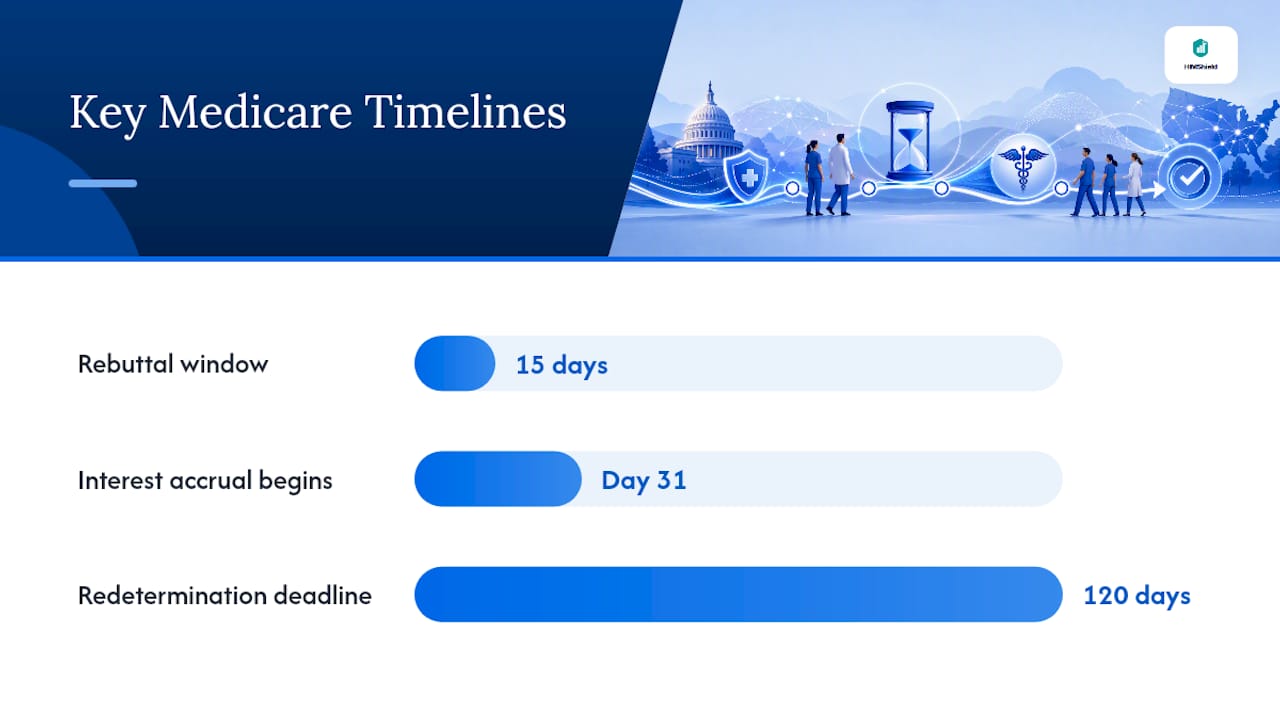
For Medicare claims, you have 15 calendar days to file a rebuttal, but filing one does not stop recoupment from starting. To actually pause the clock and preserve full appeal rights, you need to file a redetermination request within 120 days of the demand. That redetermination is the first rung of a five-level appeal ladder that runs through reconsideration, an Administrative Law Judge hearing, the Medicare Appeals Council, and finally judicial review.
A few mechanics worth building into your decision:
- Interest begins accruing on day 31 after the initial determination if the balance isn't repaid.
- Requesting immediate recoupment can actually save you money by stopping interest from accruing further.
- Extended Repayment Schedules (ERS) are available when repayment would create genuine financial hardship.
- Higher appeal levels carry Amount in Controversy (AIC) thresholds, so verify the disputed amount qualifies before filing.
- Commercial payer timelines vary by contract, so check your provider agreement for automatic recoupment language and appeal windows before assuming Medicare rules apply.
Every appeal filing should include the original demand letter, any prior decision letters, and the full documentation package you assembled.
Should You Pay, Negotiate, or Appeal the Overpayment?
Not every disputed dollar is worth fighting for, and pretending otherwise burns credibility you'll need for the claims that actually matter.
- If your documentation clearly supports the billed code, appeal it, and put your strongest effort behind the claims most likely to win rather than contesting every line item on principle.
- If the record is genuinely weak on a specific claim, consider limited payment instead of an appeal you're likely to lose. Regional payer guidance makes the same point: practices that appeal everything tend to dilute the strength of their best cases.
- When a commercial payer hints at contract action during the dispute, weigh long-term network access against the dollar amount in question before you dig in.
- If repayment would strain cashflow, request an ERS and raise settlement options while keeping your appeal rights intact wherever possible.
Pro Tip: Treat every dollar you contest as a resource decision, not just a compliance decision. Staff time spent building a weak appeal is staff time not spent on the claim you can actually win.
How Can Your Practice Prevent the Next Overpayment Demand?
The best response to an overpayment demand is never needing to write one again.
- Run a targeted self-audit on the specific claim types cited in the demand, and fix the systemic issue rather than just the flagged claims.
- Brief clinicians on documentation completeness, focusing on medical necessity language, matching orders, and contemporaneous entries for high-risk CPT codes.
- Build a pre-submission check into your workflow so charge-capture and documentation gaps get caught before claims go out, not after a payer flags them.
- Bring in a defensive partner when workload or internal expertise falls short. A tool like a clinical documentation platform can run a rapid self-audit, flag documentation risk before submission, and produce audit-ready reports that make the next demand letter far less likely.
Guides on how to self-audit physician billing records and prepare for a payer audit walk through the specific checks worth running quarterly.
Publisher Perspective: Lessons From Audits and What Realistically to Expect
Most overpayment audits recover some money for the payer. Walking in expecting a full reversal sets you up for disappointment; the realistic goal is minimizing the payout, not eliminating it. Practices that appeal every line item usually dilute their strongest cases and lose credibility with reviewers who start tuning out weak arguments. The audits that end well almost always share one trait: the treating clinician stayed involved from day one, because contemporaneous clinical context is often the single piece of evidence that changes an outcome.
— Elena
How Himshield Helps Practices Prevent the Next Demand Letter
Some platforms catch coding, documentation, and charge-capture gaps before claims ever reach a payer, which is the cheapest place to fix them. These platforms build per-provider, per-payer Revenue Leakage Reports, send automated compliance alerts when a chart looks audit-vulnerable, and draft corrections physicians can approve with a single e-signature.
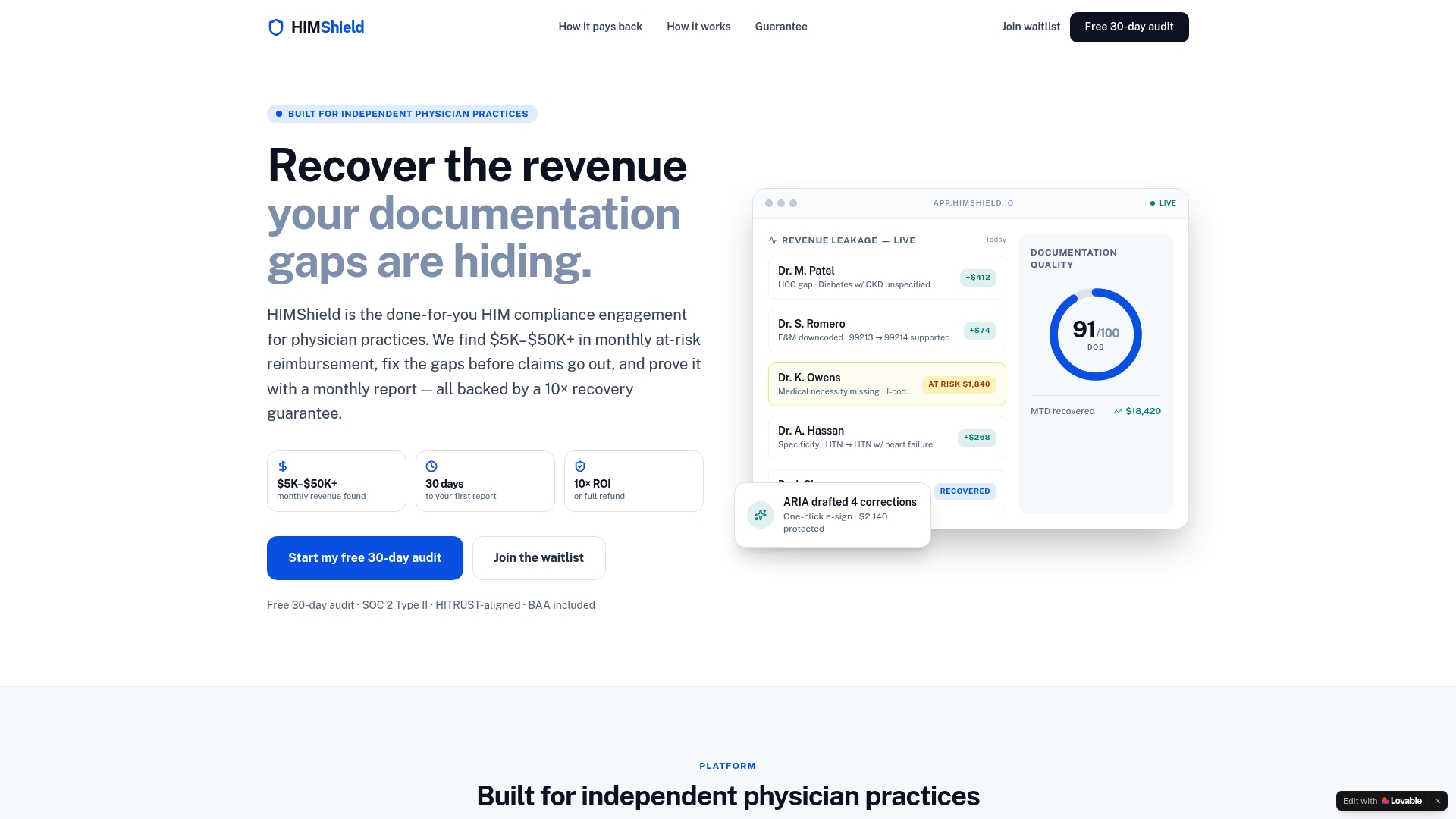
When a demand letter does arrive, having real-time documentation quality scoring and audit-ready records already assembled turns a scramble into a routine response. Some services offer a free 30-day audit before any subscription commitment, providing an opportunity to find out what your charts actually reveal. Visit Himshield's platform overview to see the Revenue Leakage Report in action, or check how the 30-day audit connects to your EHR and start recovering the dollars your documentation is already earning.
Sources
CMS Medicare overpayment guidance, the AMA payor audit checklist, and BDO's practical recoupment advisory cover the procedural detail this article summarizes.
FAQ
What Is the Deadline for a Medicare Rebuttal?
You have 15 calendar days to file a rebuttal, but a rebuttal does not stop recoupment from starting while the payer reviews it.
How Long Do I Have to File a Redetermination?
Redetermination requests must be filed within 120 days of the demand letter to preserve your full appeal rights on the Medicare appeal ladder.
When Does Interest Start Accruing on an Overpayment?
Interest begins accruing on day 31 after the initial determination if the balance remains unpaid, per CMS guidance.
Should I Appeal Every Line Item in a Demand Letter?
No. Focus resources on your strongest, best-documented claims rather than contesting every line, since spreading effort thin tends to weaken your credibility on the cases most likely to succeed.
Can Preventive Tools Reduce Future Overpayment Demands?
Yes. Certain platforms flag documentation and charge-capture gaps before claims submission, which reduces the coding and record issues that trigger overpayment demands in the first place.