
A compliant coding correction process never erases the original clinical entry. It amends the chart with a dated, attributed correction, then rebuilds and resubmits a full replacement or void claim using the correct frequency code and the original payer claim control number. Get anyone of those pieces wrong and you either create legal exposure in the record or trigger a CO-18 duplicate denial. HIPAA amendment rules, CMS corrected-claim requirements, and platforms like HIMShield exist to keep those two tracks, the chart and the claim, moving in sync.
TL;DR:
- Correct amendments must keep the original chart entry intact, clearly timestamped, and referenced in the claim to avoid legal risks and duplicate denials.
- Using the wrong frequency code or omitting the payer claim control number when resubmitting a replacement or void claim leads to common CO-18 duplicate claim denials.
- Clinical content corrections require provider review and signature, while administrative fixes can be made by billing staff, following a strict policy to ensure compliance.
- Re-auditing error patterns within six to twelve weeks focuses efforts on high-dollar, frequent issues, preventing recurring coding mistakes.
- HIMShield streamlines corrections by identifying high-risk coding gaps, auto-drafting correction language, and assembling documentation for payer audits.
Table of Contents
- What Are the Steps in the Coding Correction Process?
- Who Can Amend a Patient Record, and What Approvals Are Required?
- Why Do Corrected Claims Get Denied as Duplicates?
- How Do You Amend an EHR Chart Without Creating Legal Risk?
- How Do You Find the Root Cause Behind Repeated Coding Errors?
- What's the Checklist for Processing One Corrected Claim?
- What Independent Practices Get Wrong About Fixing Errors
- How HIMShield Speeds Up Every Step of This Process
- Sources
- FAQ
What Are the Steps in the Coding Correction Process?
The workflow breaks into four moves: identify, amend, decide, and resubmit. Skip a step and you either lose the filing window or resubmit the same broken claim twice.
- Capture evidence at discovery. Pull the EOB or ERA, the original claim, and the chart excerpt in question. Note who entered the original documentation and when, since that identity matters for the amendment log.
- Amend the chart first, per policy. Add an addendum or correction in the EHR that preserves the original entry, timestamp, author, and reason for change. Never overwrite or delete the original note.
- Apply the documentation test. If the chart supports a different code than what was billed, it's a correction. If the chart is accurate but the payer disagrees with a clinical judgment call, it's an appeal, and it follows a separate process with its own deadlines.
- Rebuild and resubmit the claim. For a correction, use frequency code 7 (replacement). For a full retraction, use frequency code 8 (void). Either way, include the original payer claim control number so the payer can match the new submission to the old one. Track the 999 and 277CA acknowledgments, then watch the ERA for the expected adjustment.
That sequence matters because misclassifying a correction as an appeal, or the reverse, wastes filing windows and produces avoidable denials. Getting the classification right on day one saves a second resubmission cycle later.
Who Can Amend a Patient Record, and What Approvals Are Required?
Not every fix belongs to the same person. A billing team member can correct a transposed diagnosis code or a registration error. A change to clinical content, the actual assessment, plan, or exam findings, requires the treating provider's review and sign-off, since that content reflects their clinical judgment.
Your written amendment policy should spell out:
- Which roles (HIM staff, billers, coders, providers) may make which categories of changes
- The audit-trail elements every amendment must carry: visible original entry, date/time stamp, editor identity, and stated reason for the change
- Who can unlock a signed note, and how that unlock event itself gets logged and reviewed
- The escalation path when a correction touches both administrative and clinical content
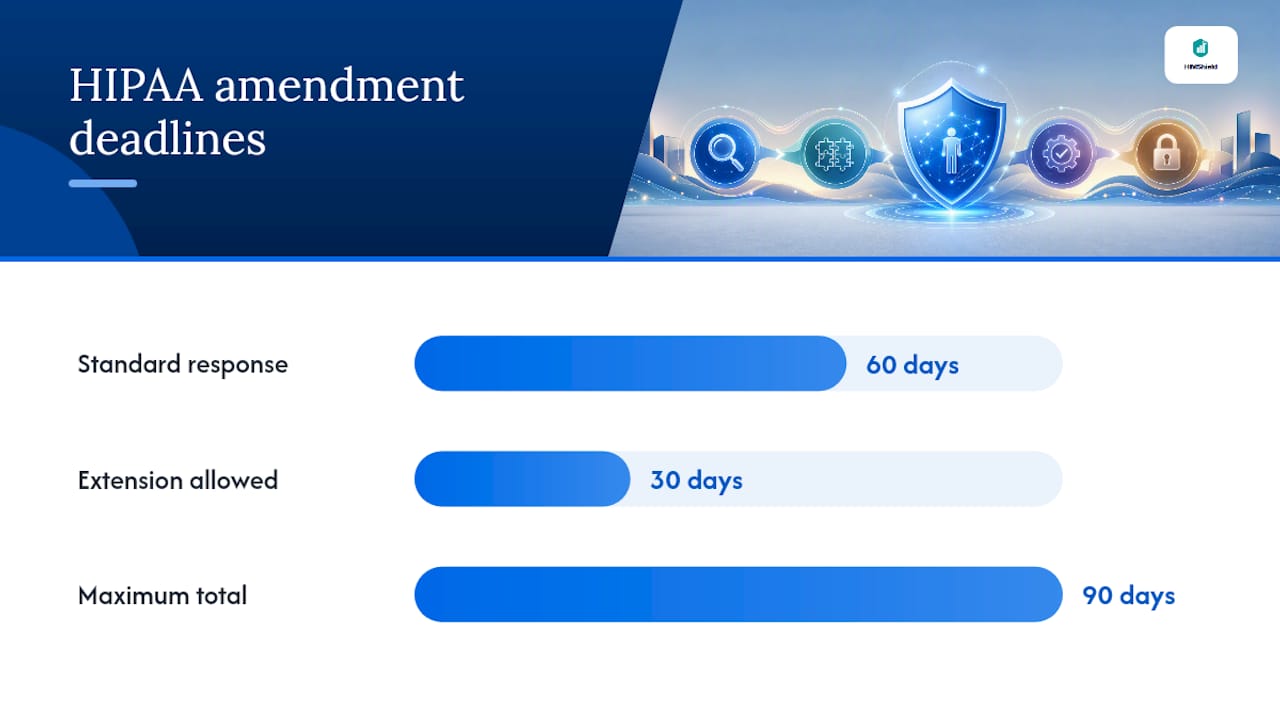
Under HIPAA, covered entities must respond to a patient's amendment request within 60 days, with one possible 30-day extension, and the entity must document who reviewed the request and the outcome. Build that clock into your intake workflow so billing-related requests and clinical amendment requests don't get stuck in the same queue with the same deadline confusion.
Pro Tip: Route billing-only amendment requests through your revenue-cycle team and clinical amendment requests through HIM or the provider directly. Mixing the two queues is the fastest way to miss the 60-day deadline on one of them.
Why Do Corrected Claims Get Denied as Duplicates?
A corrected claim needs three things to succeed: the right frequency code, the original payer claim control number, and a genuinely complete replacement. Miss any one and the payer's system reads your correction as a duplicate of the original claim.
Frequency code 7 (replacement) tells the payer "process this instead of the original." Use it when you're correcting a code, modifier, charge amount, or date of service on a claim that should still exist in some form.
Frequency code 8 (void) tells the payer "cancel the original entirely." Use it when the claim shouldn't have been billed at all, wrong patient, duplicate submission, wrong provider.
The original payer claim control number, sometimes called the ICN, PCN, or DCN, has to appear in the REF*F8 segment of the 837 transaction, or the corresponding field on a CMS-1500. Without it, the payer has no way to link your correction to the claim it's replacing.
A few failure points to watch for:
- A replacement claim is a full swap, not a patch. Copy every line item from the original, then change only what needs changing. Drop a line by mistake and you've just underbilled yourself.
- Clearinghouses sometimes strip the REF*F8 segment during transmission, which produces a persistent CO-18 duplicate denial that looks like a coder error but is actually an EDI configuration problem.
- Check your clearinghouse's handling of frequency-code claims before you spend a week retraining staff on something that was never their mistake.
CO-18 (duplicate claim/service) is the denial code you'll see most often when the payer control number or frequency flag doesn't come through correctly.
How Do You Amend an EHR Chart Without Creating Legal Risk?
An addendum adds new information to a note that was accurate at the time it was written, dated and signed on the day you add it. A correction fixes information that was wrong, and it has to reference the original entry rather than replace it outright
- Write the addendum or correction as a new, separate entry. Never edit the body of the original note directly.
- Date and time-stamp the new entry with today's date, not the original date of service, and sign it.
- State the reason for the change in plain language: what was wrong, what it should say, and why.
- Confirm the original entry remains visible in the record alongside the new one. Obliterating or hiding the original is the single fastest way to turn a billing fix into a legal liability.
AHIMA guidance is explicit that audit trails must retain previous versions and that policies should define how amendments propagate to patient portals, connected health information exchanges, and any legacy system that pulled a copy of the record before the correction happened. If a wrong note already synced to a portal, your policy needs a notification step, not just a silent backend fix. Decide in advance which errors call for a retraction versus a correction, since a retraction usually carries a stronger obligation to notify anyone who already relied on that record.
How Do You Find the Root Cause Behind Repeated Coding Errors?
Fixing one chart tells you nothing about why the error happened. The audit sequence that actually surfaces root cause runs in a fixed order: read the clinical note first, then check the code assigned, then check the claim that went out the door. Reversing that order, starting from the claim, biases you toward blaming the biller when the real issue sits upstream in the documentation template.
Once you've got a sample, calculate the error rate and the dollar impact by provider and by code, not just an overall percentage. That breakdown tells you where to spend your correction effort first.
Common root causes worth checking before you retrain anyone:
- A note template that auto-populates a diagnosis that doesn't match the actual visit
- Modifier misuse on procedure codes, often a training gap rather than intentional upcoding
- Registration errors feeding wrong payer or plan data into the claim
- Clearinghouse configuration dropping required segments before the payer ever sees them
Pattern analysis across many small, frequent audits produces far more usable insight than one large annual review, because it lets you re-audit the same provider or code within six to twelve weeks and confirm the fix actually worked. If a pattern points to a material, repeated overpayment rather than an isolated slip, that's the point to loop in practice counsel and consider voluntary self-disclosure rather than quietly correcting claims one at a time.
Pro Tip: Prioritize your re-audit list by dollar impact, not alphabetically by provider. A 3% error rate on your highest-volume E/M code costs more than a 15% error rate on a rarely-billed procedure.
What's the Checklist for Processing One Corrected Claim?
Print this and keep it at the desk of whoever handles corrections day to day.
- Discovery: Pull the EOB/ERA, note the payer claim control number, and gather the chart excerpt.
- Amend: Add the addendum or correction in the EHR per policy, with reason, date/time, and editor identity recorded.
- Decide: Run the documentation test. Chart supports a different code? Correction. Chart is accurate, payer disagrees clinically? Appeal.
- Rebuild and submit: Copy the full original claim, apply the correction, set frequency code 7 or 8, and include the REF*F8 payer control number.
- Verify: Monitor the 999 and 277CA acknowledgments, then confirm the ERA shows the expected reversal and adjustment.
| Step | Owner | Output |
|---|---|---|
| Discovery | Biller/RCM | EOB, PCN, chart excerpt |
| Amend | Provider or HIM | Signed, dated addendum/correction |
| Decide | Coder/RCM lead | Correction or appeal classification |
| Rebuild & submit | Biller | Full replacement/void claim (code 7/8) |
| Verify | RCM manager | Confirmed ERA adjustment, audit note filed |
What Independent Practices Get Wrong About Fixing Errors
Most practices treat the chart fix and the claim fix as one task, but they're two separate compliance obligations running on two separate clocks. I've seen practices nail the EHR amendment and then resubmit a replacement claim missing the payer control number, right back to a duplicate denial. The highest-yield change I advise first is almost always prioritization: fix the highest-dollar, highest-frequency error pattern before chasing every small one. That's exactly where automated detection earns its keep. A tool can flag which coding gaps carry the biggest revenue risk per provider and draft the correction language a physician can review and sign in one click, instead of a biller reconstructing it from scratch.
— Elena
How HIMShield Speeds Up Every Step of This Process
Every step above, capturing evidence, amending correctly, choosing correction versus appeal, rebuilding the claim, takes time your billing team doesn't have when it's also chasing this month's new denials. Some platforms close that gap by flagging the coding and documentation risks that actually cost money before they turn into denials or audits, so your team spends its correction time on the errors worth fixing first.
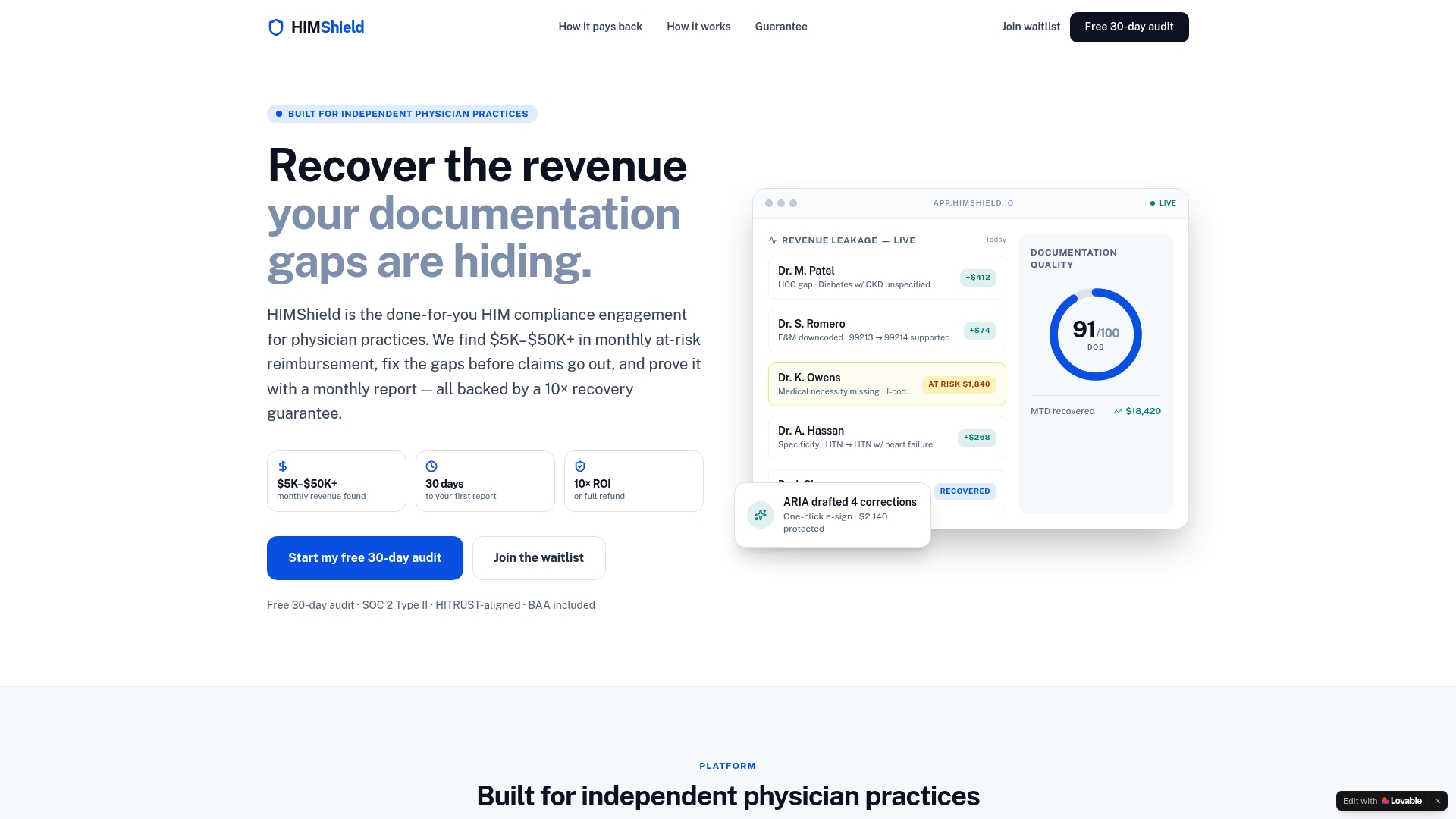
One platform scans EHR data to generate per-provider, per-payer revenue leakage reports, sends automated compliance alerts when a pattern crosses a risk threshold, and auto-drafts the correction language for physician e-signature instead of leaving that write-up to whoever has time between patients. When you're ready to defend a submission during a payer audit, it assembles the documentation into a submission-ready response rather than making your team rebuild it from scratch under deadline pressure. For teams juggling third-party HIPAA-aware tools, resources like this overview of HIPAA compliance apps are worth a look alongside your platform choice.
Request your free 30-day audit and see which coding and documentation gaps are costing your practice the most before your next payer review.
Sources
FAQ
What's the difference between a correction and an appeal?
A correction fixes a code or charge that doesn't match the documentation and gets resubmitted as a replacement claim. An appeal contests a payer's clinical judgment on an accurate claim, and it follows a separate process with its own deadline.
When should I use frequency code 7 versus code 8?
Use frequency code 7 (replacement) when you're correcting a claim that should still exist in some form. Use frequency code 8 (void) when the claim shouldn't have been billed at all.
How long does a practice have to respond to a patient's amendment request?
Covered entities must respond within 60 days, with one possible 30-day extension if needed.
Can I delete or overwrite the original chart entry when correcting it?
No. The original entry must remain visible with its timestamp and author, and the correction is added as a new, separately dated entry that references it.
How often should a practice re-audit after a coding correction?
A re-audit within six to twelve weeks confirms whether the corrective action actually fixed the error pattern rather than just the one chart you caught.
How can HIMShield help with the coding correction process?
HIMShield flags high-dollar coding and documentation risks before submission, auto-drafts corrections for physician sign-off, and assembles audit-ready documentation when a payer review comes up.