
Most UnitedHealthcare denial reasons fall into five buckets: eligibility problems, missing or expired prior authorization, documentation or coding gaps, services your plan excludes, and missed filing deadlines. The immediate move is to pull up your Explanation of Benefits, find the denial code and the appeal deadline, and act before that window closes. Many denials in these categories can be resolved with corrections or appeals.
TL;DR:
- Most UnitedHealthcare denials are due to eligibility, prior authorization, documentation, coding, or missed filing deadlines, all of which can often be corrected or appealed.
- Reading the denial codes and appeal deadlines carefully on the Explanation of Benefits is essential for timely and effective resolution.
- Submitting a complete, well-organized appeal with specific clinical evidence and addressing the cited coverage criteria increases chances of overturning denials.
- Many denials stem from preventable submission errors like missing modifiers or expired authorizations, highlighting the importance of pre-claim accuracy.
- Rapid action, including gathering records, confirming details with providers, and requesting peer reviews, is crucial to minimize delays and denials' impact.
Table of Contents
- Why Did UnitedHealthcare Deny My Claim?
- How Do I Read My UHC Denial Notice or EOB?
- What Should I Do the Moment I Get a Denial?
- Reconsideration, Appeal, or External Review: Which Path Applies?
- What Documents Actually Strengthen a UHC Appeal?
- How Can You Avoid a Repeat Denial Next Time?
- Why Do So Many Denials Trace Back to the Submission, Not the Care?
- What's the Real Fix Here: Faster Appeals or Fewer Denials in the First Place?
- A Note for Practices: Stopping Denials Before They Start
- Sources
Why Did UnitedHealthcare Deny My Claim?
UnitedHealthcare groups denials into a handful of recurring categories, and knowing which one applies tells you exactly what to fix. The insurer's own claims guidance walks through these categories and notes that many are resolvable once the missing piece gets added back in.
- Eligibility or enrollment issues. Your coverage lapsed, you were between plans, or the provider checked benefits under the wrong policy. A quick call to confirm active enrollment on the date of service usually settles this.
- Prior authorization problems. The authorization was never obtained, it expired before the service date, or the CPT code billed doesn't match what was actually approved. This is one of the most common and most fixable categories.
- Incomplete clinical documentation. The claim didn't include enough detail to meet the medical necessity standard in UnitedHealthcare's Coverage Determination Guidelines (CDGs), so the reviewer had nothing to approve against.
- Coding, bundling, or modifier errors. A wrong modifier, an unbundled code that should have been billed together, or a mismatched diagnosis code. These typically call for a corrected claim rather than a full appeal.
- Non-covered services and timely filing. Some services are carved out of your plan entirely, and some claims simply arrived after the filing deadline. Both require different remedies, and neither response to a simple resubmission.
How Do I Read My UHC Denial Notice or EOB?
Your EOB carries more information than most people realize. Look for the claim number, the group code, the specific denial reason, and, critically, the appeal deadline. That deadline is often buried in small print near the bottom of the page.

A quarter of the population reports that dealing with prior authorizations is one of the biggest burdens in getting health care, according to KFF polling. That frustration usually traces back to the codes on this exact document.
The codes themselves come from a national standard called CARC (Claim Adjustment Reason Codes), sometimes paired with RARC (Remittance Advice Remark Codes) for extra detail. A few you'll see often:
- CO-16: Claim lacks information needed for processing, often a missing modifier or attachment.
- CO-197: Prior authorization was not obtained.
- CO-29: The timely filing limit expired.
- CO-97: The service is bundled into another payment already made.
- CO-22: This may be covered by another payer, like coordination of benefits.
Denials also sometimes cite a specific CDG, which points to the exact coverage criteria the reviewer used. Those guidelines live on uhcprovider.com, and your provider's office can pull the relevant policy. A CO-16 or CO-97 is usually a technical fix. A denial citing a CDG for medical necessity is substantive and typically needs a real appeal.
What Should I Do the Moment I Get a Denial?
Speed matters here. Appeal windows are shorter than most people expect, and evidence gets harder to gather the longer you wait.
- Confirm the exact denial reason and the appeal deadline printed on the EOB. Don't guess. Read the code.
- Save everything. Screenshot the online claim status, download the EOB as a PDF, and keep the denial letter in a dedicated folder.
- Get your claim number and ask your provider's billing office what documentation they actually submitted, and whether prior authorization was requested on time.
- Call the billing office directly. Ask whether they'll resubmit a corrected claim or whether you need to file the appeal yourself.
- Request an expedited or peer-to-peer review if the denial involves an urgent or ongoing treatment where delay could harm your health.
Pro Tip: Ask the billing office for a timestamped submission confirmation or clearinghouse acknowledgment, not just a verbal "we sent it." That timestamp becomes your best evidence if the denial claims the filing was late.
Reconsideration, Appeal, or External Review: Which Path Applies?
UnitedHealthcare uses a two-step dispute process, and skipping the first step tends to get your case rejected before it's even reviewed.
- File a claim reconsideration first. This is the informal review step where a corrected claim, a missing document, or a clarification often resolves the issue without a formal appeal. UnitedHealthcare's provider appeals guidance treats reconsideration as a required first stop for most disputes.
- Escalate to a formal appeal if reconsideration fails. This is where you submit full documentation, a physician narrative, and any CDG citations that support medical necessity.
- Request a peer-to-peer review for medical necessity disputes. Getting your treating physician on the phone with a UnitedHealthcare medical director resolves many disputes faster than paperwork alone, since the reviewer can ask direct clinical questions.
- Pursue external independent review when eligible, particularly for denials involving experimental or investigational treatment classifications, putting the decision in front of a reviewer outside UnitedHealthcare entirely.
Commercial plan appeals generally run on a timeline near 180 days from the denial date, while Medicare Advantage appeals move on a shorter clock, as outlined in Medicare's appeals guide. If your health is at immediate risk, ask specifically for an expedited appeal. That request triggers a faster review than the standard track.
What Documents Actually Strengthen a UHC Appeal?
A thin appeal gets a thin review. Include the denial letter or EOB, your claim number, member ID, complete medical records, relevant imaging or lab reports, and a physician letter of medical necessity that speaks directly to your case rather than reading like a form letter.
- Match each document to the specific CDG cited in your denial. If the denial references a particular coverage guideline, your appeal should address that guideline point by point.
- For experimental or investigational denials, attach peer-reviewed studies or a specialty society statement supporting the treatment.
- Organize with a short cover letter and tabbed attachments so a reviewer isn't hunting for the physician's letter buried on page 40.
Pro Tip: Skip the generic template letters. Individualized physician narratives that cite specific clinical findings and directly reference the insurer's own coverage criteria tend to outperform boilerplate appeals by a wide margin. Sample structures from the NCLER appeal letter templates can help you build one that reads like a real clinical argument instead of a form.
How Can You Avoid a Repeat Denial Next Time?
Prevention beats appeal every time, and most of it happens before you ever walk into the appointment.
- Verify eligibility and in-network status before the visit, not after the bill arrives.
- Get prior authorization numbers in writing, and confirm the CPT code approved matches what will actually be billed.
- Ask about carve-outs. Some services, like certain elective procedures, sit outside standard coverage entirely.
- Ask your provider's office to confirm complete documentation and accurate CPT/ICD mapping before the claim goes out the door.
- Request an itemized claim after service and scan your EOB promptly. Technical denials are far easier to fix in week one than in month three.
Why Do So Many Denials Trace Back to the Submission, Not the Care?
Most claim denials originate in the submission itself: a coding gap, a missing modifier, or a documentation shortfall that never should have made it out the door. UnitedHealthcare reports a 98% approval rate for claims that are eligible, timely, and complete. Automated pre-submission checks and documentation quality scoring catch these gaps before they turn into denials, and the strongest long-term fix is a corrected physician narrative or accurate coding mapping at the provider level.

What's the Real Fix Here: Faster Appeals or Fewer Denials in the First Place?
Most guidance on this topic focuses entirely on the appeal, and that's backwards. An appeal is damage control. By the time you're gathering medical records and drafting a physician narrative, you've already lost weeks and absorbed stress you didn't need to. The more useful conversation is why the denial happened at all, and in most cases, the answer sits upstream at the provider's desk, not in the insurance company's decision.
That's not a comfortable thing to say to a member holding a denial letter, but it's true. A missing modifier, an expired authorization number, a CDG citation nobody checked before submission. These aren't insurance company tricks. They're preventable administrative gaps. If you take one thing from this article beyond the appeal steps, take this: ask your provider's office what they're doing to catch these errors before claims go out, not just after they bounce back. Using a therapy superbill checklist for California clients can help therapy and outpatient billing teams avoid these common denials.
Check your EOB for the exact denial code and deadline, gather your records, call the provider's billing office, and open a reconsideration if the fix isn't a simple resubmission. Watch the clock on appeal timelines, and push for a peer-to-peer review when a physician can make the clinical case better than paper ever will. The administrative side of medicine rewards people who move fast and read the fine print.
— Elena
A Note for Practices: Stopping Denials Before They Start
Everything above is written for patients, but if you run or manage an independent physician practice, the equation looks different. You're not appealing one denial. You're managing hundreds of claims a month, and every coding gap or missing modifier chips away at revenue you already earned.
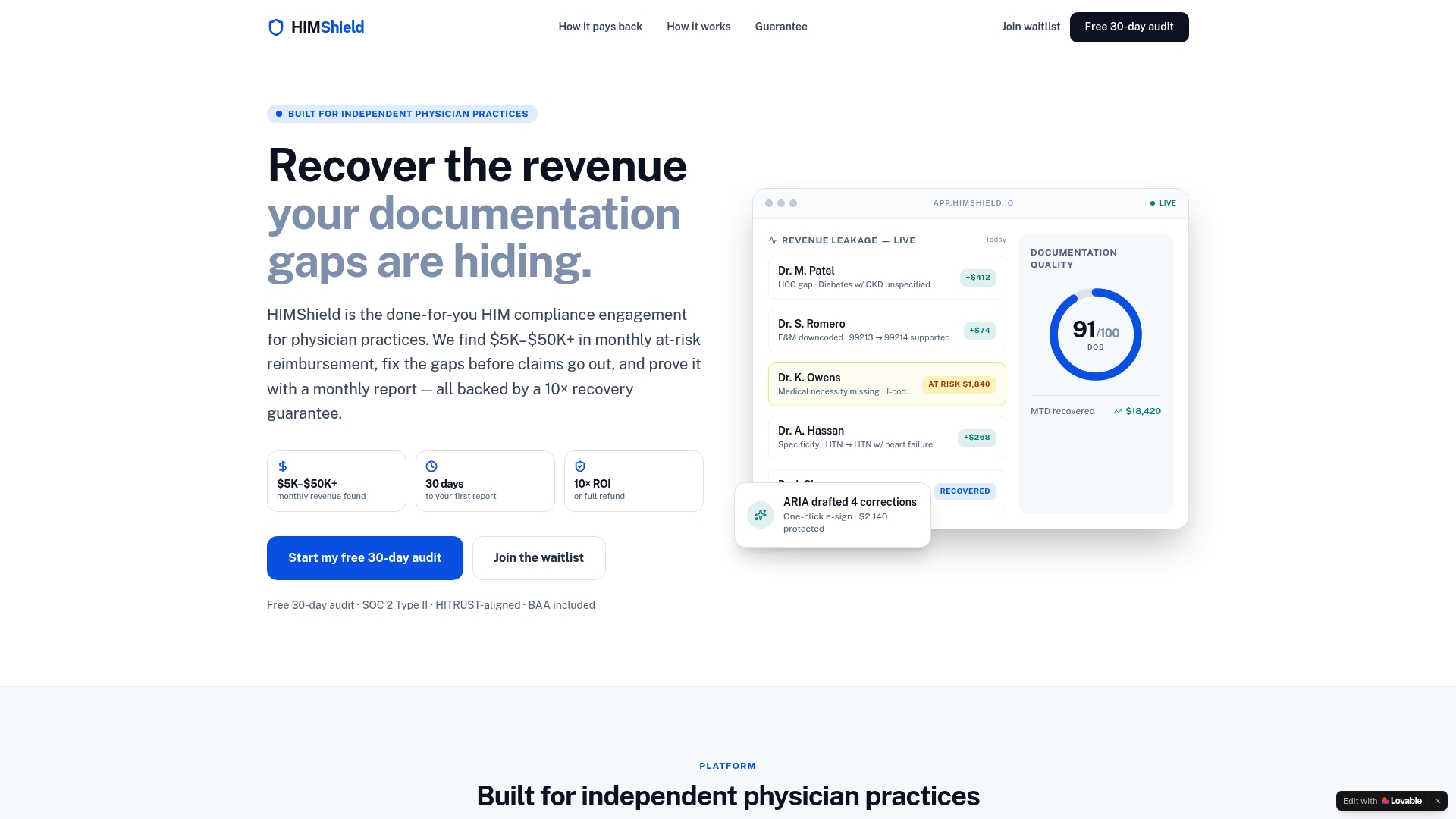
This solution scans EHR data before claims go out, flags coding, documentation, and charge-capture risks, and drafts corrections with one-click physician e-signature, catching the exact CDG mismatches and modifier errors that turn into the denials described above. Practices often uncover substantial recoverable revenue once these gaps get identified. This is a provider-facing tool, not something patients need. If you're a practice administrator wondering how many of your denials trace back to preventable submission errors, start a 30-day audit and see the numbers for your own claims.
This article is general information, not a substitute for advice from a qualified financial advisor. Consult a qualified financial professional about your own circumstances before acting on anything here.
Sources
- Get the facts: Why was my claim denied, and what can I do about it? | UnitedHealthcare
- 2026 UnitedHealthcare Care Provider Administrative Guide for Commercial, Individual Exchange, and Medicare Advantage
- Medicare
- KFF health tracking poll: prior authorizations rank as a major burden